The Norsk Lundehund is a primitive breed classified in FCI Group V, Section 2 – Hunting Dogs without working trials. The first mentions of dogs from the island of Værøy (Varøy) date back as early as 1591. The breed’s name comes from the Norwegian word lund, meaning puffin – a characteristic bird inhabiting the rocky coasts of Norway.
Lundehunds were highly specialized hunting dogs used for puffin hunting. They were able to retrieve birds from narrow rock crevices, bring them back alive to their owners, and even collect eggs. A good Lundehund was worth its weight in gold – owning a larger number of dogs was a sign of the owner’s wealth.
With the development of new hunting techniques and the introduction of nets, these dogs were no longer needed 🙁, and the breed’s population began to decline rapidly. It was not until 1937, after many difficulties, that a single breeding line was successfully restored. Shortly thereafter, the breed was officially recognized by the Norwegian Kennel Club and the FCI.
Unfortunately, the restoration of the breed was possible only through very closely related individuals. Inbreeding saved the Lundehund from extinction, but its effects are still felt today – among other things, in the form of very small litters.
FCI BREED STANDARD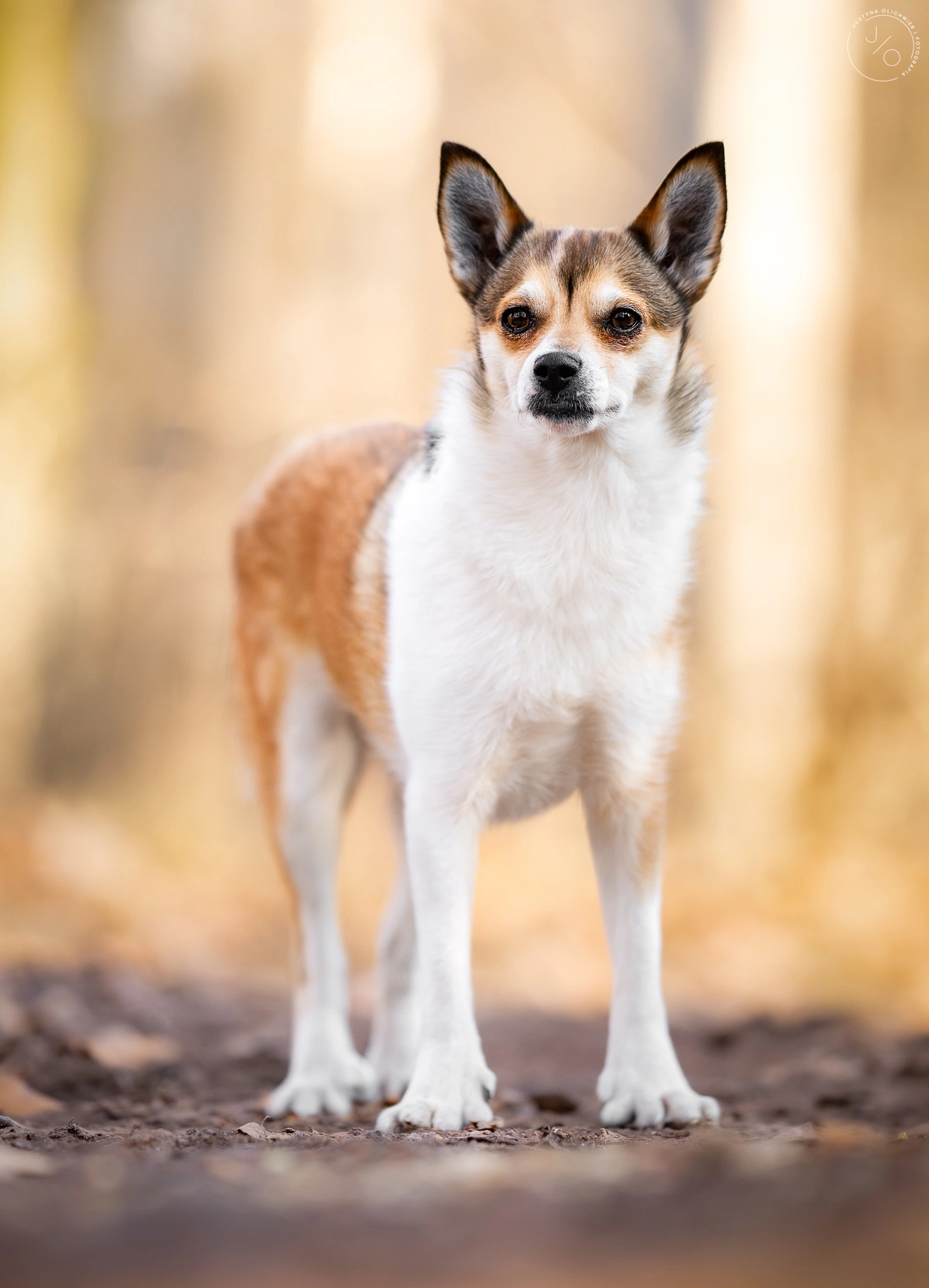
The character of the Norsk Lundehund is often described as dog–cat–alien 😉. It is a lively, active, and extremely curious dog – sometimes its curiosity seems bigger than the dog itself, which weighs only 7–8 kg.
The Lundehund announces its presence with a characteristic, long “yodeling” sound that is hard to mistake for any other breed. It is everywhere at once: in the kitchen, in the bathroom, in your bed, and in the garden – often all at the same time 😉. It loves human closeness, cuddling, and resting as close as possible to its owner. It also learns very quickly where the fridge is 😅😉.
This is an intelligent, alert, and independent dog that nevertheless forms a strong bond with its family.
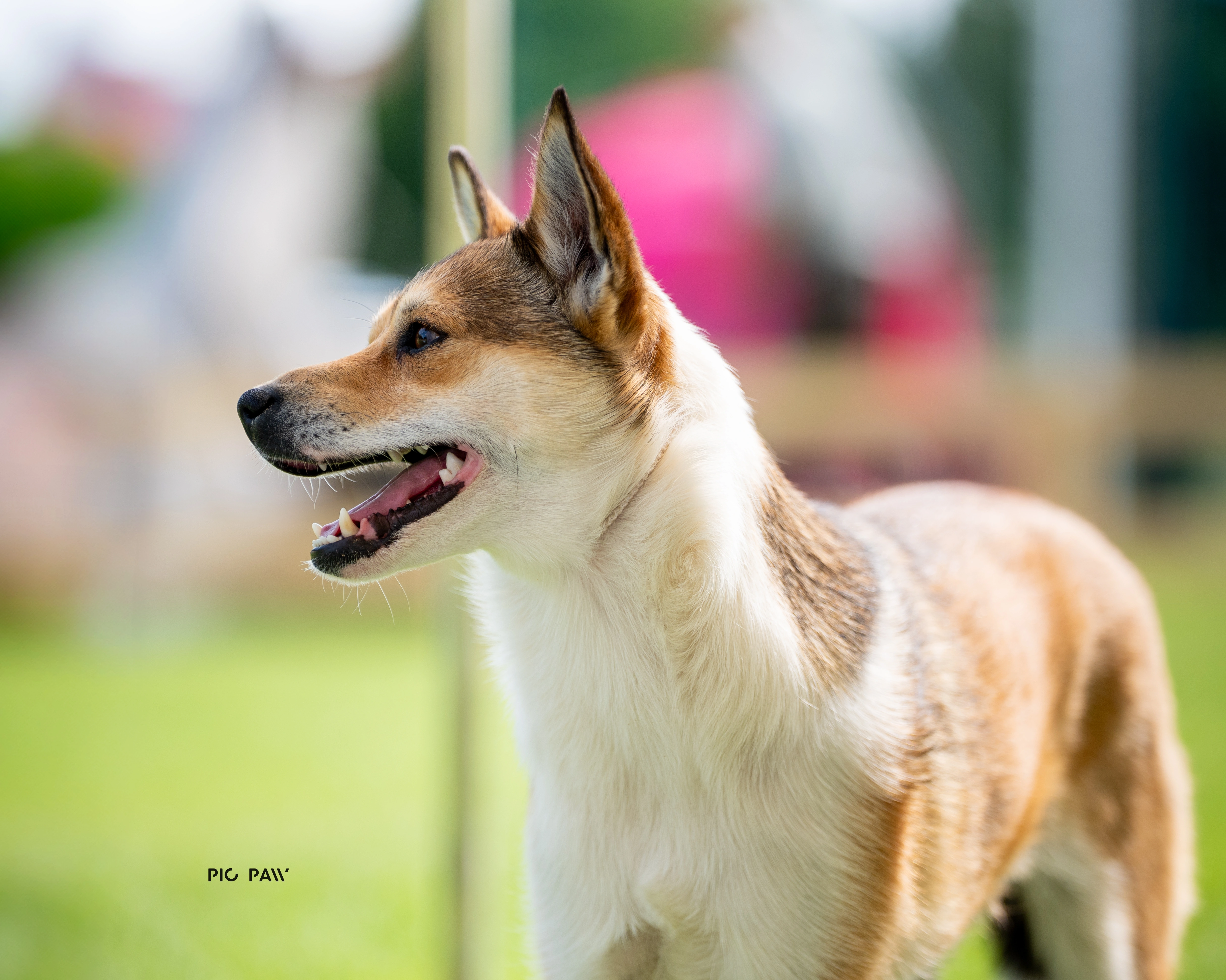
The appearance of the Lundehund is not only original but truly fascinating. A fox-like face with a sharp expression, small erect ears that can close the ear canal – especially when squeezing through tight passages – are its trademark.
The limbs are relatively long, and each paw has at least six toes. This feature, known as polydactyly, is characteristic of the breed and required by the breed standard 🙂.
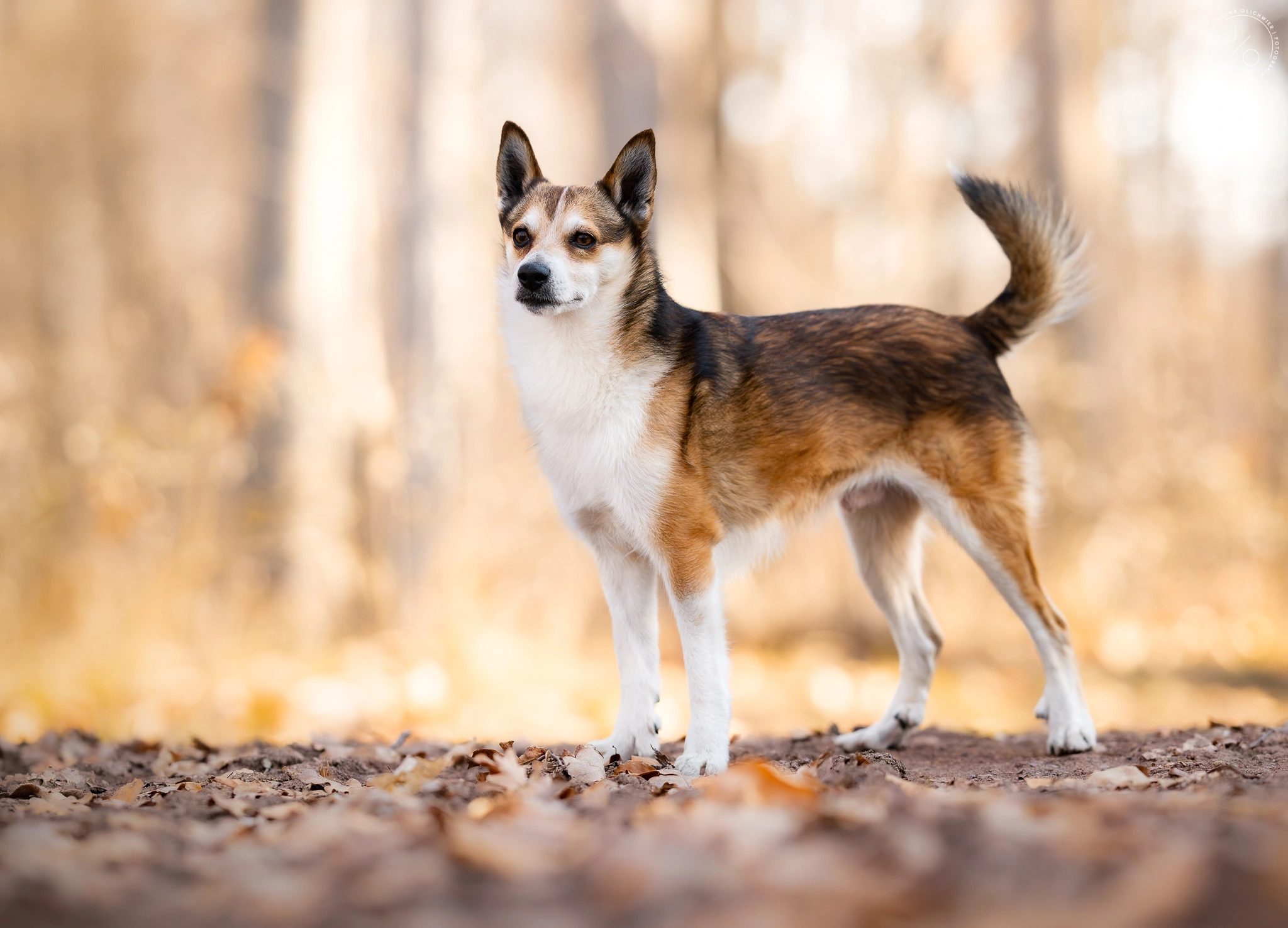
Another remarkable trait is the extremely flexible neck – the dog can bend its head backward and rest it on its back. The legs can spread out at an angle of up to 90 degrees, which in the past allowed efficient movement through narrow rock crevices.
The coat is short and dense, with heavier feathering on the back of the thighs. Coat colors range from reddish-brown to fawn with black-tipped hairs, as well as black or gray with white markings.
The Norsk Lundehund is an extremely rare breed – there are currently around 1,400 dogs worldwide, of which probably no more than half are breeding animals. One of the most serious health problems in the breed is Lundehund Syndrome (IL), a disorder of protein absorption in the intestines. This disease can be fatal and remains a major challenge for breeders and breed enthusiasts.
In response to these issues, a breed “strengthening” program is being carried out in Norway through controlled crossbreeding of Lundehunds with the Norwegian Buhund and the Finnish Spitz. Dogs from this program remain in Norway and are monitored long-term for health, preservation of typical breed traits, reproduction, and temperament.
Owning a Lundehund is not only a joy but also a responsibility. It is a dog for knowledgeable, patient people who are ready for life with a truly unique, primitive breed with an unmistakable character.