The Welsh Corgi Cardigan is a breed belonging to FCI Group I, Section 1 – Sheepdogs. Its history dates back many centuries. It is believed that the ancestors of the Cardigan arrived in the British Isles with the Vikings. The name “corgi” itself comes from the Welsh language – cor gi means “dwarf dog.”
For centuries, Cardigans were valued as herding dogs. Their low stature was a great advantage, allowing them to skillfully avoid kicks from sheep or cattle. The breed quickly gained recognition not only among shepherds but also at royal courts, where its intelligence, alertness, and devotion to humans were highly appreciated.
If you would like to learn more about the breed standard, you can find a link to the official standard below:
FCI BREED STANDARD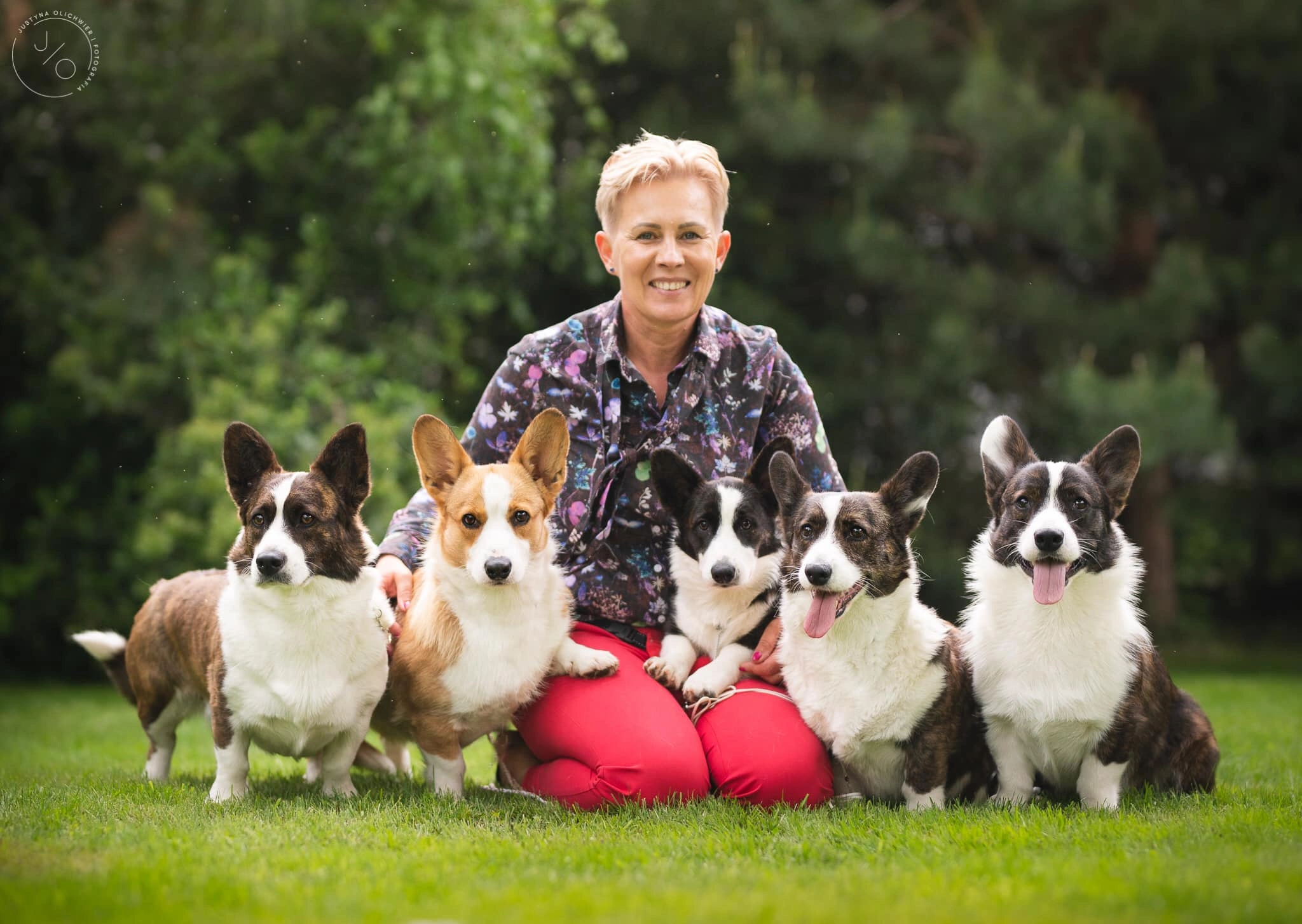
The Welsh Corgi Cardigan is an exceptionally intelligent dog, strongly focused on people and eager to cooperate. It learns very quickly – which can be both an advantage and a challenge. A Cardigan remembers not only what we teach it, but also… bad habits 🫣.
It is an alert, energetic, and agile dog, while also being very sociable and curious. It likes to keep an eye on everything that happens at home and during walks, and treats barking as a natural form of communication. Many individuals are true “food lovers” – with the right motivation in the form of treats, they can do almost anything 😉.
Corgis are often described as “small dogs with big hearts” ❤️. Their behavior shows immense joy for life, loyalty, and surprisingly mature emotional intelligence.
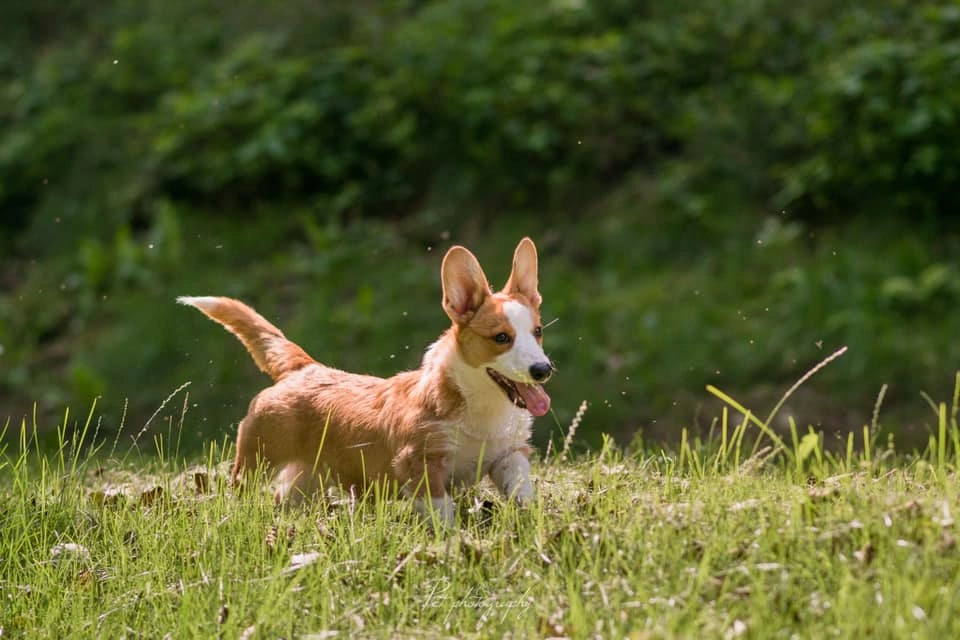
The appearance of the Welsh Corgi Cardigan, especially puppies, almost always brings a smile. It is a dog with a strong head, large, alert ears, powerful legs, and a well-developed chest.
Characteristic features include its long body and a tail resembling a fox’s brush – a natural extension of the body, carried in line with the back. Despite its low height, the Cardigan is a solid, well-proportioned, and hardy dog.
Due to its anatomical structure, the weaker point of the Welsh Corgi Cardigan is the spine. Therefore, prevention is extremely important from puppyhood – appropriate supplementation, sensible exercise management, and avoiding excessive strain.
A well-balanced diet is equally important. Excess weight can place undue stress on the long body and short limbs, which is why weight control is one of the key elements of responsible care for this breed.
Responsible breeders currently carry out tests for genetic diseases such as DM (degenerative myelopathy) and PRA (progressive retinal atrophy), as well as X-rays of the hips and elbows.
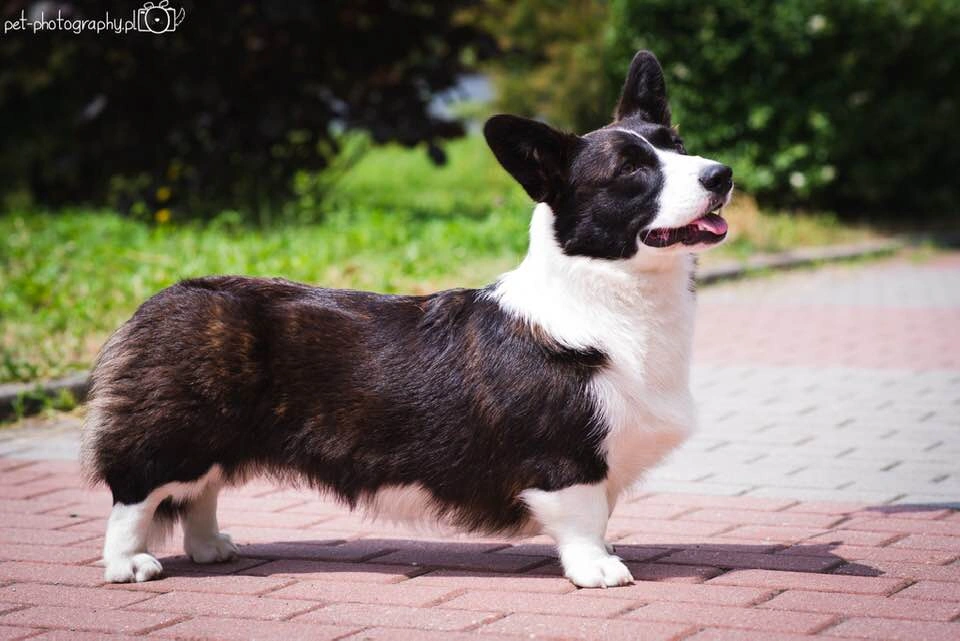
The breed occurs in several striking color varieties, including:
- brindle,
- tricolor,
- blue merle,
- red and sable.
Colors are always arranged in a characteristic way – darker areas form the so-called “cardigan,” while the legs, underside of the belly, and neck should be white. Each coat pattern highlights the unique character of the breed.
It is worth remembering that there are two distinct corgi breeds:
Welsh Corgi Cardigan – the smarter ones 😉
Welsh Corgi Pembroke – the prettier ones 😉
And quite seriously: both breeds are exceptional, but they differ in temperament, structure, and history. The choice should always depend on the future owner’s lifestyle.
In our home, Welsh Corgi Cardigans have lived continuously for over 12 years – and everything suggests they will stay with us for a long time. It is a breed that can steal your heart once and for all.